

 0
0 0
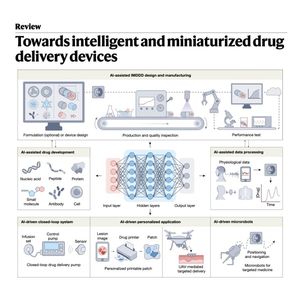
0The paper details the emergence of intelligent and miniaturized drug delivery devices (IMDDDs), which represent a significant shift toward personalized and autonomous medicine. By integrating artificial intelligence, electronics, and advanced materials, these systems move beyond traditional dosing to provide real-time sensing and adaptive, closed-loop drug administration. The sources categorize these innovations into bioelectronic, physically triggered, physiochemical-responsive, and living devices, each designed to improve patient adherence and therapeutic precision. Furthermore, the text explores how AI-driven algorithms optimize everything from initial drug development and device fabrication to the navigation of medical microrobots. Despite their immense potential in treating cancer, diabetes, and cardiovascular diseases, researchers must still overcome substantial hurdles regarding biocompatibility, manufacturing consistency, and regulatory approval. Ultimately, these technologies aim to create a more responsive healthcare experience by synchronizing medication release with the body's dynamic physiological needs.
References:
Wei X, Buse J B, Chen H, et al. Towards intelligent and miniaturized drug delivery devices[J]. Nature, 2026, 651(8107): 897-908.
