

 2
2 0
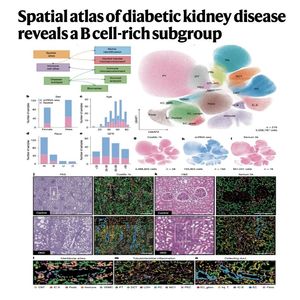
0Scientists have developed a comprehensive spatial atlas of the human kidney to better understand the cellular architecture of diabetic kidney disease (DKD). By integrating high-resolution single-cell transcriptomics with existing genomic data, researchers identified specific tissue niches and microenvironments that change as the disease advances. A significant discovery was a unique B cell-rich immune environment that specifically indicates a higher risk for rapid kidney failure. This research produced new biomarkers and plasma protein panels capable of predicting patient outcomes more accurately than traditional clinical models. Ultimately, these findings offer a path toward precision medicine by allowing doctors to identify which patients might benefit most from targeted therapies.
References:
Dumoulin B, Levinsohn J, Klötzer K A, et al. Spatial atlas of diabetic kidney disease reveals a B cell-rich subgroup[J]. Nature, 2026: 1-12.
