
 12
12 0
0Title:
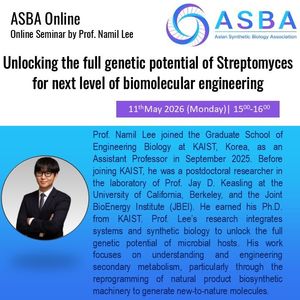
Unlocking the full genetic potential of Streptomyces for next level of biomolecular engineering
Astract:
Streptomyces, soil-dwelling gram-positive bacteria, remain promising microorganisms for natural product production, known as secondary metabolites (SMs), with diverse pharmaceutical bioactivities such as antimicrobial, antifungal, anticancer, and immunosuppressive properties. Despite Streptomyces species harboring over 30 SM biosynthetic gene clusters (smBGCs), there is a lack of linkage between these clusters and their respective products, with the majority remaining silent under laboratory conditions, thereby limiting their effective utilization. To fully harness Streptomyces' genomic potential, the researcher has employed systems and synthetic biology approaches for: (1) Mining novel smBGCs; (2) Understanding the regulation of smBGCs to awaken them; (3) Enhancing SM production rationally based on multi-omics data-driven bottleneck determination; and (4) Reprogramming SM biosynthetic machinery for retrobiosynthesis. Systems biology approach offers a comprehensive understanding of secondary metabolism and potential engineering targets, while synthetic biology and retrobiosynthesis approach enable the production of new-to-nature compounds, overcoming conventional metabolic engineering challenges.
Personal Profile:
Prof. Namil Lee joined the Graduate School of Engineering Biology at KAIST, Korea, as an Assistant Professor in September 2025. Before joining KAIST, he was a postdoctoral researcher in the laboratory of Prof. Jay D. Keasling at the University of California, Berkeley, and the Joint BioEnergy Institute (JBEI). He earned his Ph.D. from KAIST. Prof. Lee’s research integrates systems and synthetic biology to unlock the full genetic potential of microbial hosts. His work focuses on understanding and engineering secondary metabolism, particularly through the reprogramming of natural product biosynthetic machinery to generate new-to-nature molecules.
