

 0
0 0
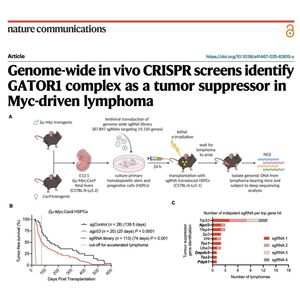
0Researchers utilized an in vivo CRISPR/Cas9 genome-wide screen to identify genes that prevent the development of Myc-driven lymphoma. The study discovered that the GATOR1 complex, consisting of the proteins NPRL3, DEPDC5, and NPRL2, acts as a critical tumor suppressor by regulating the mTORC1 signaling pathway. Deleting any of these components significantly accelerates cancer growth in mice, matching the impact of losing the well-known suppressor p53. Notably, lymphomas lacking GATOR1 function become addicted to hyperactive mTORC1, making them exceptionally vulnerable to treatment with mTOR inhibitors. These findings suggest a promising precision medicine strategy for human patients with specific genetic deficiencies in B-cell malignancies.
References:
Potts M A, Mizutani S, Deng Y, et al. Genome-wide in vivo CRISPR screens identify GATOR1 complex as a tumor suppressor in Myc-driven lymphoma[J]. Nature Communications, 2025, 16(1): 7582.
