

 1
1 0
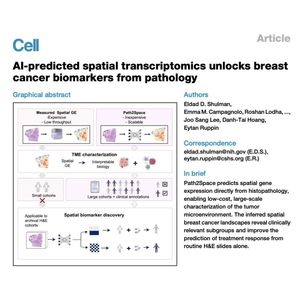
0The research introduces Path2Space, a deep-learning model designed to predict spatial gene expression directly from standard H&E histopathology slides. By eliminating the need for expensive molecular assays, this tool allows researchers to analyze the tumor microenvironment at scale using routine clinical images. The authors demonstrate that the model accurately identifies three prognostic subgroups, termed SpatioTypes, which correlate with distinct survival outcomes in breast cancer patients. Furthermore, the model discovers spatial biomarkers that predict patient response to chemotherapy and trastuzumab more effectively than traditional bulk sequencing. Path2Space offers a cost-effective and scalable framework for high-resolution biomarker discovery and clinical decision-making. These findings suggest that AI-powered pathology can unlock complex biological insights from archival tissue samples across various cancer types.
References:
Shulman E D, Campagnolo E M, Lodha R, et al. AI-predicted spatial transcriptomics unlocks breast cancer biomarkers from pathology[J]. Cell, 2026.
