

 0
0 0
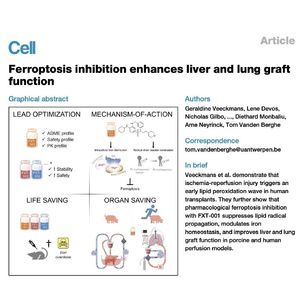
0This research introduces FXT-001, a novel pharmacological inhibitor designed to combat ferroptosis, a form of iron-dependent cell death that occurs during organ transplantation. The authors demonstrate that ischemia-reperfusion injury triggers a significant burst of lipid peroxidation in human and animal grafts, leading to severe tissue damage and organ dysfunction. Through preclinical testing in porcine and human models, the study shows that treating liver and lung grafts with FXT-001 significantly preserves organ viability, reduces injury markers, and improves overall metabolic function. Additionally, the researchers developed next-generation analogs, FXT-002 and FXT-003, which offer enhanced safety profiles and better stability for potential clinical use. These findings suggest that targeting the ferroptosis pathway is a viable therapeutic strategy to increase the success rates of life-saving transplant procedures. Overall, the work establishes a translational foundation for using these inhibitors to mitigate the harmful effects of oxidative stress in various medical contexts.
References:
Veeckmans G, Devos L, Gilbo N, et al. Ferroptosis inhibition enhances liver and lung graft function[J]. Cell, 2026.
