

 0
0 0
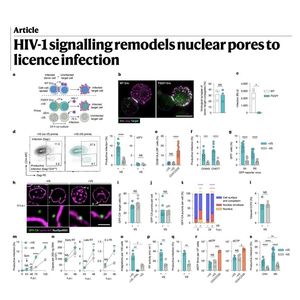
0This research reveals that HIV-1 overcomes infection barriers in resting T cells by using cell-to-cell spread to trigger internal signaling. While free-floating virus particles fail to infect these cells, direct contact between cells initiates CD4–LCK signaling, which activates the enzyme CDK1. This process remodels nuclear pores, effectively opening a gateway for the viral capsid to enter the nucleus. By reorganizing the nuclear pore complex, the virus bypasses the need for full T cell activation. These findings explain how HIV-1 successfully spreads within the body's immune system by licensing its own nuclear import. Thus, the study identifies a specific viral strategy that transforms resistant resting cells into permissive hosts.
References:
Mesner D, Whelan M V X, Shivkumar M, et al. HIV-1 signalling remodels nuclear pores to licence infection[J]. Nature, 2026: 1-11.
