

 0
0 0
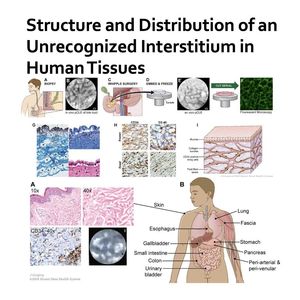
0The paper details the discovery of a previously unrecognized anatomical structure within the human body, identified as a fluid-filled interstitial space supported by a lattice of collagen bundles. Researchers utilized in vivo confocal laser endomicroscopy to observe this network, which had remained hidden in prior studies because traditional tissue fixation methods caused the spaces to collapse. This interstitium is widespread, appearing in the submucosa of the digestive tract, the dermis, and various connective tissues subject to mechanical compression. The study suggests these channels function as shock absorbers and serve as primary conduits for interstitial fluid and lymph. Furthermore, the findings indicate that this open network may play a critical role in cancer metastasis, fibrosis, and the development of edema.
References:
Benias P C, Wells R G, Sackey-Aboagye B, et al. Structure and distribution of an unrecognized interstitium in human tissues[J]. Scientific reports, 2018, 8(1): 4947.
