

 0
0 0
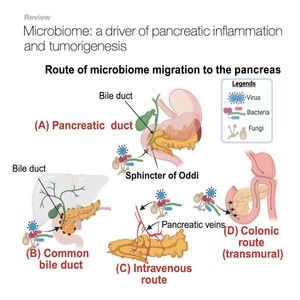
0Recent research identifies the intratumoral microbiome as a critical factor in the development and progression of pancreatic cancer. Although once thought to be sterile, the pancreas can be colonized by bacteria, fungi, and viruses that migrate from the gut, mouth, or skin. These microbial populations drive tumorigenesis by triggering oncogenic signaling and creating an immunosuppressive microenvironment that hinders the host's immune response. Understanding these microbial influences offers new therapeutic opportunities, such as using probiotics or targeted antibiotics to improve the efficacy of immunotherapy. Researchers are currently working to map precise migration routes and functional interactions to better integrate microbiome modulation into clinical cancer care. Successful management of the disease may eventually depend on personalizing treatments based on a patient's unique microbial profile.
References:
Alam A, Mayengbam S S, Senchanthisai S, et al. Microbiome: a driver of pancreatic inflammation and tumorigenesis[J]. Trends in Cancer, 2026.
