

 0
0 0
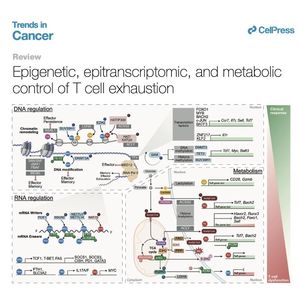
0This review explores how T cell exhaustion is governed by a complex synergy of epigenetic, epitranscriptomic, and metabolic networks. Chronic exposure to tumors triggers a dysfunctional state in T cells, characterized by a progressive loss of effector function and stabilized by fixed chromatin landscapes. Key metabolites like alpha-ketoglutarate and acetyl-CoA act as essential cofactors that link cellular energy states directly to gene regulation. Scientists are investigating various therapeutic interventions, such as CRISPR-based engineering and transient pharmacological inhibition, to reverse this exhaustion and restore antitumor immunity. These strategies aim to reprogram T cells toward a stem-like phenotype, which is more effective for long-term cancer treatment. Balancing these reprogramming techniques with safety is vital, as permanent genetic changes can sometimes lead to unintended genomic instability.
References:
Slater C, Simon A, Laprie-Sentenac M, et al. Epigenetic, epitranscriptomic, and metabolic control of T cell exhaustion[J]. Trends in Cancer, 2026.
