

 0
0 0
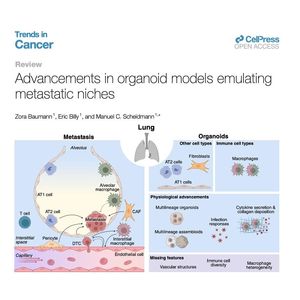
0Recent medical reviews highlight the development of human-induced pluripotent stem cell-derived organoids as a transformative tool for studying cancer metastasis. Traditional research relies heavily on rodent models, which often fail to reflect human physiology or support the large-scale screening necessary for drug discovery. By combining these 3D tissue structures with cancer cells, researchers create "chimeroids" that simulate how tumors colonize specific organs like the brain, lungs, liver, and bone. These advanced systems are evolving from simple cell clusters into multilineage niches that incorporate vascular, stromal, and immune components. While no single model yet captures the full complexity of a living organ, they offer a scalable, human-relevant platform to identify new therapeutic targets. Ultimately, these innovations aim to reduce the high mortality rates associated with metastatic tissue colonization by providing more accurate preclinical data.
References:
Baumann Z, Billy E, Scheidmann M C. Advancements in organoid models emulating metastatic niches[J]. Trends in Cancer, 2026.
