

 2
2 0
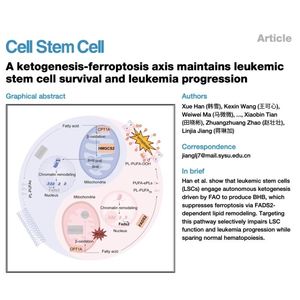
0This study identifies a critical metabolic survival mechanism in leukemic stem cells (LSCs) known as the ketogenesis-ferroptosis axis. Researchers discovered that these malignant cells utilize fatty acid oxidation to produce the ketone body β-hydroxybutyrate (BHB) via the rate-limiting enzyme HMGCS2. This autonomous production of BHB acts as a shield, protecting the cancer cells from ferroptosis, a form of oxidative cell death, by remodeling phospholipids through the epigenetic regulation of FADS2. While this pathway is essential for the maintenance and progression of acute myeloid leukemia, it appears largely dispensable for the function of healthy hematopoietic stem cells. Consequently, targeting this specific ketogenic process offers a promising therapeutic window to eliminate leukemia-initiating cells without damaging the patient's normal blood production.
References:
Han X, Wang K, Ma W, et al. A ketogenesis-ferroptosis axis maintains leukemic stem cell survival and leukemia progression[J]. Cell Stem Cell, 2026.
