

 0
0 0
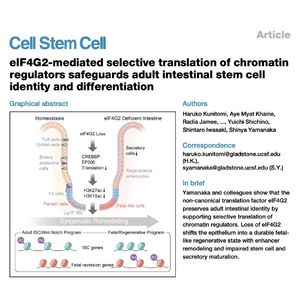
0This research explains how the protein eIF4G2 acts as a vital safeguard for the identity and function of adult intestinal stem cells. By analyzing mice lacking this specific factor, researchers discovered that its absence causes the intestinal lining to lose its mature characteristics and revert to a fetal-like state. This cellular transformation occurs because eIF4G2 is required to translate key chromatin regulators that maintain adult genetic programs. Without these regulators, the intestine experiences epigenetic remodeling, leading to the loss of specialized cells and the activation of regenerative signaling pathways. Ultimately, the study highlights how precise translational control is essential for preventing adult tissues from losing their developmental maturity.
References:
Kunitomi H, Khaine A M, Jamee R, et al. eIF4G2-mediated selective translation of chromatin regulators safeguards adult intestinal stem cell identity and differentiation[J]. Cell Stem Cell, 2026.
