

 0
0 0
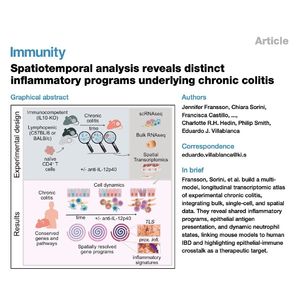
0This study presents a comprehensive spatiotemporal transcriptomic atlas of chronic colitis by integrating longitudinal data from two distinct mouse models. Researchers utilized bulk, single-cell, and spatial RNA sequencing to map how the immune, epithelial, and stromal compartments are rewired during disease progression. The findings reveal a conserved inflammatory signature between murine models and human inflammatory bowel disease, particularly driven by dynamic neutrophil expansion and enhanced epithelial antigen presentation. Spatial analysis further identified three unique inflammatory programs that reside in specific tissue domains, such as tertiary lymphoid structures and the proximal epithelium. By demonstrating that these models recapitulate complementary aspects of human disease, the authors provide a framework for optimizing therapeutic targets and personalizing clinical interventions. The resulting high-resolution resource serves as a foundational tool for understanding the sequential logic of intestinal immune dysregulation.
References:
Fransson J, Sorini C, Castillo F, et al. Spatiotemporal analysis reveals distinct inflammatory programs underlying chronic colitis[J]. Immunity, 2026.
