

 1
1 0
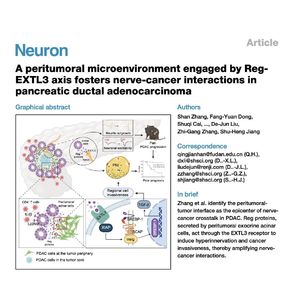
0This research identifies a critical nerve-cancer crosstalk within the peritumoral microenvironment of pancreatic ductal adenocarcinoma (PDAC). The study reveals that CD4+ T cells release interleukin-22, which prompts nearby acinar cells to secrete Reg proteins. These proteins then bind to the EXTL3 receptor on both tumor cells and neurons, simultaneously driving cancer invasiveness and nerve growth. This biological axis results in increased pain, higher nerve density, and poor patient prognosis. Ultimately, the findings suggest that pharmacological targeting of the Reg-EXTL3 pathway could suppress tumor progression and alleviate cancer-related neurological symptoms.
References:
Zhang S, Dong F Y, Cai S, et al. A peritumoral microenvironment engaged by Reg-EXTL3 axis fosters nerve-cancer interactions in pancreatic ductal adenocarcinoma[J]. Neuron, 2026.
