

 0
0 0
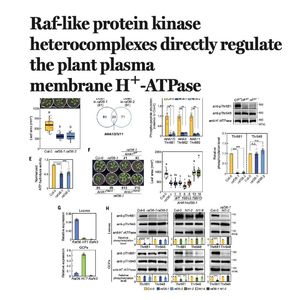
0Researchers have identified a vital regulatory mechanism for plasma membrane proton pumps that is essential for plant development and environmental responses. The study reveals that C5-Raf and C7-Raf protein kinases cooperate to form a heterocomplex that activates these pumps by phosphorylating a specific site known as Thr881. This molecular pathway is highly conserved across various plant species, ranging from ancient liverworts to modern flowering plants. In the model plant Arabidopsis, specific kinases like Raf36 and HT1 direct this process to control overall growth and the opening of stomata in response to light and carbon dioxide levels. By detailing how low CO2 levels trigger this activation, the authors provide a complete mechanistic framework for light-induced stomatal opening. These findings offer significant potential for biotechnological applications aimed at improving crop productivity through the genetic refinement of plant transport systems.
References:
Takase H, Nagano A, Yamauchi S, et al. Raf-like protein kinase heterocomplexes directly regulate the plant plasma membrane H+-ATPase[J]. Science, 2026, 392(6799): 755-760.
