

 0
0 0
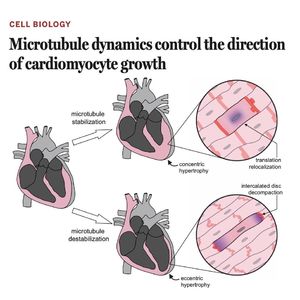
0This research explores how microtubule dynamics serve as a molecular switch to determine the direction of heart muscle cell growth, known as cardiac hypertrophy. By utilizing animal models, human tissue samples, and advanced imaging, the authors demonstrate that stabilizing microtubules triggers cell widening and heart wall thickening through the relocalization of protein synthesis and the compaction of cell-to-cell contacts. In contrast, destabilizing microtubules promotes cell lengthening and heart chamber dilation by weakening these structural connections at the intercalated disc. These findings reveal that the physical state of the microtubule network directs where new contractile units are added within the cell. Ultimately, the study identifies microtubules as a primary coordinator of structural remodeling, offering new targets for treating diverse forms of heart disease.
References:
Scarborough E A, Randell R M, Uchida K, et al. Microtubule dynamics control the direction of cardiomyocyte growth[J]. Science, 2026: eadz1970.
