

 1
1 0
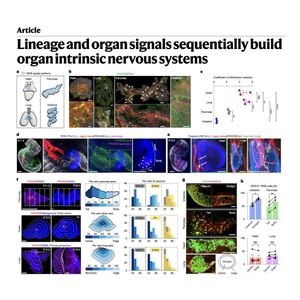
0This research explores how organ intrinsic nervous systems (OINSs), such as those in the heart, lungs, and gut, develop their unique structures and identities from a shared embryonic origin. Using 3D imaging and single-cell sequencing, the study reveals a "dual logic" where neural crest cell migratory lineages establish the initial spatial framework while local organ environments dictate final molecular identities. Specifically, neurons in the heart and lungs derive from Schwann cell precursors that form localized clusters, whereas enteric and pancreatic neurons arise from migratory lineages that disperse throughout the tissue. Functional experiments demonstrate that extracellular matrix (ECM) signaling acts as a critical instructive cue, capable of reprogramming neurons toward organ-specific profiles. Ultimately, the findings establish a new paradigm for how visceral organs actively shape their own neural architecture to support body-brain integration. This work provides vital insights into the developmental principles governing internal organ control and how their disruption may lead to disease.
References:
Hsu I U Y, Zhao J, Lin Y, et al. Lineage and organ signals sequentially build organ intrinsic nervous systems[J]. Nature, 2026: 1-9.
