

 2
2 0
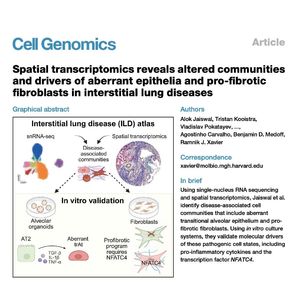
0This study presents a multimodal atlas of interstitial lung disease (ILD) by integrating single-nucleus RNA sequencing and spatial transcriptomics to map the cellular landscape of pulmonary fibrosis. Researchers identified specific pathogenic cell communities, including pro-fibrotic fibroblasts and aberrant transitional epithelial cells, that drive the destruction of healthy lung tissue. The findings reveal that a combination of pro-inflammatory cytokines—specifically TGF-β, IL-1β, and TNF-α—triggers the maladaptive differentiation of these harmful epithelial states. Furthermore, the study identifies the transcription factor NFATC4 as a critical regulator of fibroblast activation and collagen deposition. By detailing these intercellular communication networks, the authors highlight how progressive scarring disrupts the lung's natural organization and identify potential targets for therapeutic intervention.
References:
Jaiswal A, Kooistra T, Pokatayev V, et al. Spatial transcriptomics reveals altered communities and drivers of aberrant epithelia and pro-fibrotic fibroblasts in interstitial lung diseases[J]. Cell Genomics, 2026.
