

 0
0 0
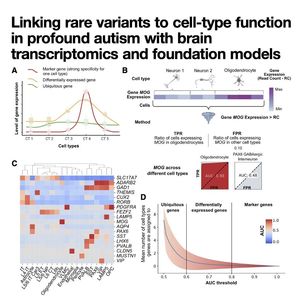
0This review examines the challenge of identifying cellular points of convergence in autism spectrum disorder (ASD) by utilizing brain transcriptomics and artificial intelligence. The researchers propose an AUC-based framework to quantify the trade-off between a gene’s cell-type specificity and sensitivity, revealing that most ASD-linked genes are broadly expressed across various brain regions rather than acting as specific markers. To bridge the gap between genetic liability and observed postmortem brain alterations, the text evaluates the potential of Perturb-seq and single-cell foundation models to predict how rare variants impact cellular transcriptomes. By integrating CRISPR-driven perturbations with deep-learning inference, the authors aim to establish a unifying mechanistic framework for understanding how diverse genetic mutations lead to neurodevelopmental vulnerabilities.
References:
Dubuc A, Renne T, Huguet G, et al. Linking rare variants to cell-type function in profound autism with brain transcriptomics and foundation models[J]. Cell Genomics, 2026, 6(4).
