

 1
1 0
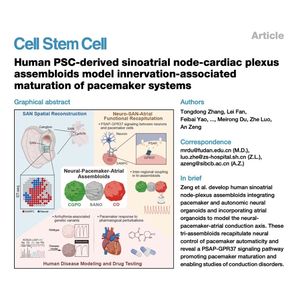
0Researchers have developed a sophisticated tri-assembloid model that mimics the human sinoatrial node (SAN) and its complex interaction with the autonomic nervous system. By integrating human pluripotent stem cell-derived pacemaker organoids with cardiac plexus and atrial organoids, the study successfully recreates the electrical conduction axis and neural regulation of heart rate. This platform allowed for the discovery of a specific PSAP-GPR37 signaling pathway that is essential for the functional maturation of pacemaker cells. Furthermore, the model serves as a powerful tool for disease modeling, demonstrating how genetic mutations like KCNJ3 contribute to heart rhythm disorders such as bradycardia. Through the use of spatial transcriptomics, the study provides a high-resolution map of the human embryonic heart, bridging the gap between anatomical structure and physiological function. Ultimately, these neuro-cardiac assembloids offer a novel human-specific system for testing pharmacological treatments and understanding the fundamental biology of the heart's natural pacemaker.
References:
Zhang T, Fan L, Yao F, et al. Human PSC-derived sinoatrial node-cardiac plexus assembloids model innervation-associated maturation of pacemaker systems[J]. Cell Stem Cell, 2026.
