

 0
0 0
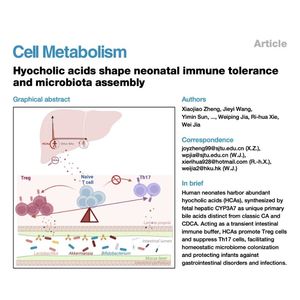
0This research explores how hyocholic acids (HCAs), a primary bile acid produced by the fetal liver, act as a vital immunological buffer during early development. While HCAs are scarce in adults, they dominate neonatal meconium and serum, playing a central role in establishing immune tolerance by promoting anti-inflammatory Treg cells while suppressing pro-inflammatory Th17 cells. This metabolic window facilitates the healthy colonization of beneficial gut microbiota, such as Bifidobacterium, while protecting infants from pathogens and gastrointestinal disorders like necrotizing enterocolitis. Clinical data further demonstrates that high neonatal HCA levels correlate with a significantly lower risk of infections and inflammatory conditions during the first year of life. Ultimately, the study identifies HCAs as a unique class of primary bile acids essential for orchestrating the early-life immune-microbiome axis.
References:
Zheng X, Wang J, Sun Y, et al. Hyocholic acids shape neonatal immune tolerance and microbiota assembly[J]. Cell Metabolism, 2026.
