

 4
4 0
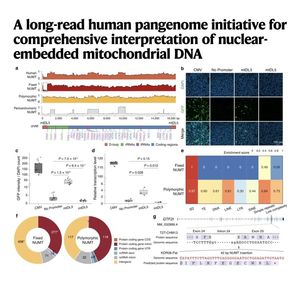
0The paper details a comprehensive study of nuclear-embedded mitochondrial DNA (NUMT), which are segments of mitochondrial genetic material that have transitioned into the human and primate nuclear genomes over evolutionary history. Utilizing advanced long-read sequencing and pangenome graph-based detection, researchers identified over 1,100 human NUMTs, distinguishing between fixed events present in all individuals and polymorphic variants that vary across populations. The study reveals that these insertions are not merely "genomic fossils" but dynamic components that can influence gene expression, splicing, and structural variation. Comparative analysis across primate lineages shows that lineage-specific insertion rates and genomic duplications drive NUMT expansion, particularly within the Pan lineage. Furthermore, the findings highlight a selective pressure against certain mitochondrial sequences in the nuclear environment and identify NUMTs as a novel source for variable number tandem repeats (VNTRs). This research ultimately establishes a high-resolution map that enhances our understanding of genomic architecture and its biomedical relevance.
References:
Fu L, Chen J, Lian D, et al. A long-read human pangenome initiative for comprehensive interpretation of nuclear-embedded mitochondrial DNA[J]. Nature Communications, 2026, 17(1): 4371.
