

 7
7 0
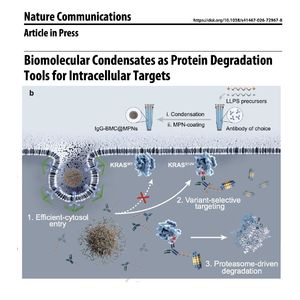
0This research introduces a novel therapeutic platform using nanoscale biomolecular condensates to achieve highly selective intracellular protein degradation. By combining antibody-guided recognition with a proteasome-targeting motif, these synthetic droplets successfully penetrate cells and recruit endogenous machinery to clear disease-causing proteins. A critical breakthrough of this design is its ability to distinguish between nearly identical proteins, specifically degrading the oncogenic KRAS G12V mutation while leaving healthy wild-type KRAS untouched. The condensates are stabilized by a metal-phenolic network shell, which prevents aggregation and ensures efficient delivery into the cytosol via active endocytosis. Beyond cancer applications, the study demonstrates the platform's modular nature by successfully targeting alpha-synuclein, a protein linked to neurodegenerative disorders. Ultimately, this technology offers a genetically unmodified approach to protein clearance that bypasses the limitations of traditional degradation methods.References:
Li Y, Jin Z, Ahmed S U, et al. Biomolecular Condensates as Protein Degradation Tools for Intracellular Targets[J]. Nature Communications, 2026.
