

 1
1 0
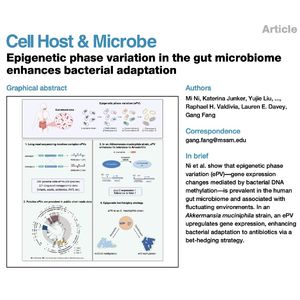
0This research identifies epigenetic phase variation (ePV) as a widespread mechanism that enables human gut bacteria to adapt to shifting environments through DNA methylation. By utilizing long-read metagenomic sequencing, scientists discovered that these epigenetic shifts create intra-strain heterogeneity, allowing microbial populations to hedge their bets against stresses like antibiotics and fecal microbiota transplantation. A specific study of Akkermansia muciniphila revealed that an ePV upregulates the mucC gene, directly increasing the bacterium's tolerance to amoxicillin. These reversible modifications offer a flexible evolutionary advantage, providing coordinated gene regulation without the permanent costs of genetic mutations. Ultimately, the findings suggest that epigenetic plasticity is a fundamental driver of microbial resilience and survival within the complex ecosystem of the human microbiome.
References:
Ni M, Junker K, Liu Y, Fan Y, Li Y, Qiao W, Zhang XS, Ksiezarek M, Mead EA, Tourancheau A, Jiang W, Blaser MJ, Valdivia RH, Davey LE, Fang G. Epigenetic phase variation in the gut microbiome enhances bacterial adaptation. Cell Host Microbe. 2026 May 19:S1931-3128(26)00175-7. doi: 10.1016/j.chom.2026.04.019. Epub ahead of print. PMID: 42161263; PMCID: PMC13196444.
