

 0
0 0
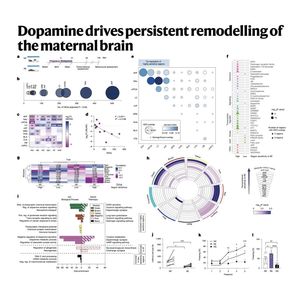
0Research published in Nature identifies dopamine as a critical driver of permanent neurological changes in the maternal brain following pregnancy and childbirth. By comparing reproductive experience in mice to virgin counterparts, scientists discovered that the dorsal hippocampal formation undergoes significant transcriptional remodeling that enhances cognitive functions like learning and memory. These long-term adaptations are regulated by H3 dopaminylation, a specific chemical modification of proteins that wrap around DNA to control gene expression. The study also demonstrates that chronic postpartum stress can interfere with these beneficial changes by disrupting natural dopamine dynamics. Notably, these findings appear to be evolutionarily conserved, as similar molecular patterns were identified in the human brain, revealing a fundamental biological mechanism for how motherhood reshapes female physiology.
References:
O’Chan J C, Di Salvo G, Cunningham A M, et al. Dopamine drives persistent remodelling of the maternal brain[J]. Nature, 2026: 1-11.
