

 0
0 0
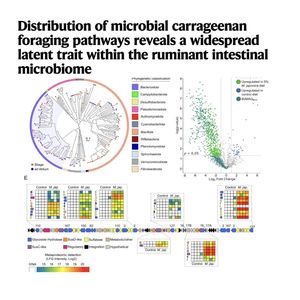
0This research investigates how ruminant livestock can digest seaweed polysaccharides, specifically carrageenan, through specialized microbial pathways. By analyzing the microbiomes of cattle fed red seaweed, scientists identified carrageenan-active polysaccharide utilization loci (CarPULs) within the genus Bacteroides. These genetic pathways, which encode keystone enzymes and sulfatases, allow the bacteria to break down complex algal sugars into energy. The study reveals that these catabolic traits are latent and widely distributed across diverse Artiodactyla species worldwide, rather than being restricted to specific geographic regions. Interestingly, these pathways appear to have an ancient evolutionary history distinct from marine bacteria, suggesting long-standing adaptation in terrestrial herbivores. This discovery highlights the potential for using seaweed as a sustainable alternative feed that leverages existing microbial "dark matter" in the gut.
References:
Tingley J P, Andersen T O, Mihalynuk L G, et al. Distribution of microbial carrageenan foraging pathways reveals a widespread latent trait within the ruminant intestinal microbiome[J]. Nature Communications, 2026, 17(1): 4237.
