

 0
0 0
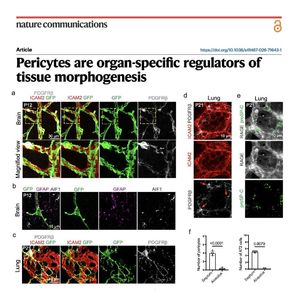
0This research explores how pericytes, cells that support blood vessels, act as organ-specific signaling centers to guide tissue development. By using mouse genetics and single-cell RNA sequencing, the study demonstrates that pericytes release distinct paracrine factors depending on their location in the body. In the postnatal lung, pericyte-derived HGF and BDNF are essential for healthy growth, as their absence impairs alveolar formation and blood vessel expansion. Conversely, these factors are dispensable in the brain, where pericytes instead utilize the growth factor Nodal to regulate vascular integrity and suppress neuroinflammation. Specifically, the loss of Nodal triggers reactive astrogliosis and microglia activation, highlighting its role in maintaining brain homeostasis. Ultimately, the findings establish that pericytes possess functional specialization that is critical for the unique morphogenetic needs of different organs.
References:
Rasouli, S.J., Kruse, K., Diéguez-Hurtado, R. et al. Pericytes are organ-specific regulators of tissue morphogenesis. Nat Commun 17, 4229 (2026). doi.org
