

 0
0 0
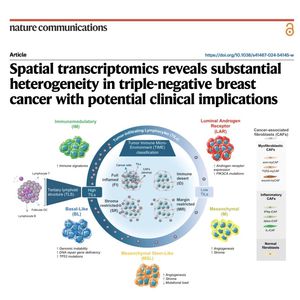
0This study utilizes spatial transcriptomics to analyze the complex internal structure and microenvironment of triple-negative breast cancer (TNBC). By examining 92 patients, researchers identified that traditional molecular classifications often overlook significant intratumoral heterogeneity and the critical role of the stroma in disease progression. A major finding is the development of a 30-gene signature for tertiary lymphoid structures (TLS), which serves as a powerful predictor of positive immunotherapy response and overall survival. The team further categorized the TNBC ecosystem into nine distinct spatial archetypes, offering a more precise framework for understanding how different cell organizations impact patient outcomes. Ultimately, these insights provide a roadmap for tailored treatments and the identification of new actionable therapeutic targets in a notoriously difficult-to-treat cancer.
References:
Wang X, Venet D, Lifrange F, Larsimont D, Rediti M, Stenbeck L, Dupont F, Rouas G, Garcia AJ, Craciun L, Buisseret L, Ignatiadis M, Carausu M, Bhalla N, Masarapu Y, Villacampa EG, Franzén L, Saarenpää S, Kvastad L, Thrane K, Lundeberg J, Rothé F, Sotiriou C. Spatial transcriptomics reveals substantial heterogeneity in triple-negative breast cancer with potential clinical implications. Nat Commun. 2024 Nov 26;15(1):10232. doi: 10.1038/s41467-024-54145-w. PMID: 39592577; PMCID: PMC11599601.
