

 0
0 0
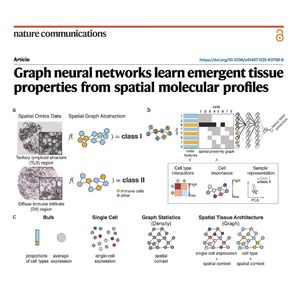
0This research evaluates the capacity of Graph Neural Networks (GNNs) to predict tissue phenotypes by analyzing the spatial organization and molecular profiles of cells. By modeling tissues as spatial graphs, the study demonstrates that while GNNs may not always outperform simpler models on small datasets, they successfully capture clinically relevant features and continuous biological trajectories, such as the progression of tumor grades. The authors utilize an ablation study to compare the predictive power of spatial context against single-cell and bulk representations across colorectal and breast cancer datasets. Beyond classification, GNNs identified complex immune infiltration patterns and cell-type interactions that traditional methods missed, including specific associations between macrophages and high-grade tumors. Ultimately, the findings highlight the potential of graph-based models as interpretable tools for uncovering the subtle, higher-order structural motifs that drive disease progression in spatial omics.
References:
Ali, M., Richter, S., Ertürk, A. et al. Graph neural networks learn emergent tissue properties from spatial molecular profiles. Nat Commun 16, 8419 (2025). doi.org
