

 0
0 0
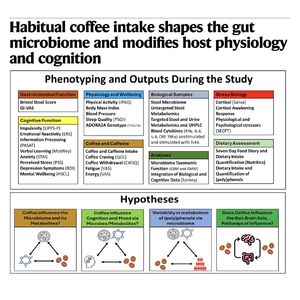
0This study explores the microbiota-gut-brain axis by comparing habitual coffee drinkers to non-drinkers and tracking the effects of caffeine withdrawal and reintroduction. Researchers discovered that regular coffee intake significantly alters fecal microbiome composition, specifically increasing species like Cryptobacterium while decreasing neuroactive metabolites such as GABA. Behavioral data revealed that while coffee drinkers showed higher impulsivity and emotional reactivity, reintroducing coffee—especially decaffeinated versions—linked to improved memory and sleep quality. The findings suggest that coffee’s influence on cognition and mood is partially mediated by the gut microbiome and is not solely dependent on caffeine content. Overall, the research highlights a complex bidirectional communication where coffee consumption shapes internal microbial environments and modifies host physiology.
References:
Boscaini S, Bastiaanssen TFS, Moloney GM, Bergamo F, Zeraik L, O'Leary C, Ferri A, Irfan M, van der Rhee M, Lindemann TIF, Schneider E, Meyyappan AC, Harold KB, Long-Smith CM, Carbia C, O'Riordan KJ, de Alvarenga JFR, Tosi N, Del Rio D, Rosi A, Bresciani L, Mena P, Clarke G, Cryan JF. Habitual coffee intake shapes the gut microbiome and modifies host physiology and cognition. Nat Commun. 2026 Apr 21;17(1):3439. doi: 10.1038/s41467-026-71264-8. PMID: 42014402; PMCID: PMC13100100.
