Used to be an avid reader? How to get back into books

11分钟 · 787·
787· 3
3
7873Follow us on Instagram: @nprlifekit
Sign up for our newsletter here.
Have an episode idea or feedback you want to share? Email us at lifekit@npr.org
Support the show and listen to it sponsor-free by signing up for Life Kit+ at plus.npr.org/lifekit
See pcm.adswizz.com for information about our collection and use of personal data for sponsorship and to manage your podcast sponsorship preferences.
NPR Privacy Policy

Picking up where we left off: Our takeaway No. 1 is read when you can, wherever you are. The hardest part about reading a book is just like opening the book. Kevin Wynn says instead of waiting for that perfect, distraction-free cinematic moment, look for smaller chances throughout the day.
If you're trying to read a book and you've been struggling to get into it, ask yourself: Do I even like this? Tracey Thomas is the host of the literary podcast The Stacks. For my work, I have to read books and finish books that I do not always like. I can tell you usually within 10 and 20 pages if I will like a book. But your reading hobby is not a job, and you don't have to finish that book.
I think if you're falling asleep while you're reading it, that's a good sign that maybe you don't like it. I think that if you are constantly checking your phone while you're reading that, that might be a sign that you don't like it. I think that if you want to do anything else but read, that might be a sign that you don't like what you're reading. And Tracy says putting down a book you don't like — that's called cultivating taste.
All right, last up: Takeaway No. 4. You're back in the habit of deep reading books that you actually like, and you want to keep that momentum going. Why not try setting some goals? When NPR producer Manzi Karana was a kid, she loved reading. But as an adult, she got away from it.
I made a really simple goal: Read a book a month, 12 books a year. And by writing down each book I read, I was able to see how easy it was to reach that goal. I increased that goal a little bit every year to make it so that it's something that I'm working towards.
If you're trying to read a book and you've been struggling to get into it, ask yourself: Do I even like this? Tracey Thomas is the host of the literary podcast The Stacks. For my work, I have to read books and finish books that I do not always like. I can tell you usually within 10 and 20 pages if I will like a book. But your reading hobby is not a job, and you don't have to finish that book.
I think if you're falling asleep while you're reading it, that's a good sign that maybe you don't like it. I think that if you are constantly checking your phone while you're reading that, that might be a sign that you don't like it. I think that if you want to do anything else but read, that might be a sign that you don't like what you're reading. And Tracy says putting down a book you don't like — that's called cultivating taste.
All right, last up: Takeaway No. 4. You're back in the habit of deep reading books that you actually like, and you want to keep that momentum going. Why not try setting some goals? When NPR producer Manzi Karana was a kid, she loved reading. But as an adult, she got away from it.
I made a really simple goal: Read a book a month, 12 books a year. And by writing down each book I read, I was able to see how easy it was to reach that goal. I increased that goal a little bit every year to make it so that it's something that I'm working towards.
You're listening to Life Kit from NPR.
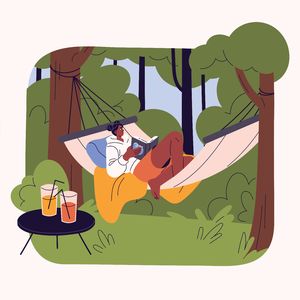
Hey, it's Marielle. I have this daydream where I go to the park and read under a tree. The sun is shining. The temperature is not too hot, but not chilly either. The ground beneath me is comfortable. I have snacks on hand, I'm hydrated, and I am captivated by the book in front of me.
It doesn't usually pan out like this in reality. Two minutes in, I'm sweating, my butt hurts from sitting on tree roots. I realize I forgot the snacks and I can't focus. So I close the book, go home, turn on the TV.
A lot of us make this mistake when it comes to reading. We think it should feel romantic, like this landmark event in our day. You know, we have this imagination that, like, oh, reading time is like this luxurious thing. I'm in my armchair sipping scotch.
Kevin Wynn is the author of the novels My Document. Every week, you have to make it a more regular habit than that because if you just wait for all those times when you're drinking scotch — hopefully you don't drink that much scotch. Hope you read more than you drink scotch. But yeah, if you wait for all those moments, you're never going to finish a book. Whether your reading daydreams involve you at the park, in an armchair, at a lakeside retreat or on the beach.
What if you let those go?
Maryanne Wolf, neuroscientist at UCLA and author of Reader, Come Home: The Reading Brain in a Digital World, says reading gives us a chance to leap into the lives and thoughts and feelings of others, a chance to leap into thoughts that we've never had before. And a chance to even appreciate that in the midst of solitude we are not alone.
On this episode of Life Kit, we have four tips to help you read more this summer. And Maryann says if you've fallen off the wagon, you can get back on. I'm telling you, that will happen. But you have to relearn those muscles. It just takes time. That's coming up after the break.
Hey, it's Marielle. I have this daydream where I go to the park and read under a tree. The sun is shining. The temperature is not too hot, but not chilly either. The ground beneath me is comfortable. I have snacks on hand, I'm hydrated, and I am captivated by the book in front of me.
It doesn't usually pan out like this in reality. Two minutes in, I'm sweating, my butt hurts from sitting on tree roots. I realize I forgot the snacks and I can't focus. So I close the book, go home, turn on the TV.
A lot of us make this mistake when it comes to reading. We think it should feel romantic, like this landmark event in our day. You know, we have this imagination that, like, oh, reading time is like this luxurious thing. I'm in my armchair sipping scotch.
Kevin Wynn is the author of the novels My Document. Every week, you have to make it a more regular habit than that because if you just wait for all those times when you're drinking scotch — hopefully you don't drink that much scotch. Hope you read more than you drink scotch. But yeah, if you wait for all those moments, you're never going to finish a book. Whether your reading daydreams involve you at the park, in an armchair, at a lakeside retreat or on the beach.
What if you let those go?
Maryanne Wolf, neuroscientist at UCLA and author of Reader, Come Home: The Reading Brain in a Digital World, says reading gives us a chance to leap into the lives and thoughts and feelings of others, a chance to leap into thoughts that we've never had before. And a chance to even appreciate that in the midst of solitude we are not alone.
On this episode of Life Kit, we have four tips to help you read more this summer. And Maryann says if you've fallen off the wagon, you can get back on. I'm telling you, that will happen. But you have to relearn those muscles. It just takes time. That's coming up after the break.

Thanks for listening.