
 6
6 0
0Title:
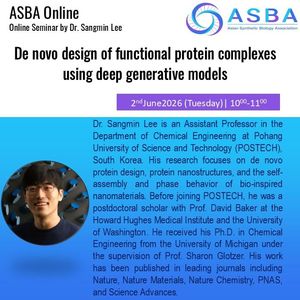
De novo design of functional protein complexes using deep generative models
Astract:
Protein complexes such as protein oligomers, cages, bundles, and patterned layers exist widely in nature and can also be constructed artificially. They participate in a variety of biological processes, including genetic material delivery, immune activation, and disease pathogenesis. Therefore, the design of artificial protein nanostructures that can regulate these biological processes has attracted extensive research attention.Over the past few decades, computational protein design has mainly relied on physics-based methods, such as scoring functions derived from theoretical chemistry and physics. However, recent advances in AI-based methods, including protein structure prediction, sequence design, and generative models, have greatly broadened the scope of achievable protein structure design.In this talk, he will provide an overview of the computational design of de novo protein nanostructures using AI-based software and present several examples of designed nanostructures, such as virus-like nanocages. Experimentally, the designed proteins were expressed in Escherichia coli, and the assembled nanostructures were verified using electron microscopy.
Personal Profile:
Dr. Sangmin Lee is an Assistant Professor in the Department of Chemical Engineering at Pohang University of Science and Technology (POSTECH), South Korea. His research focuses on de novo protein design, protein nanostructures, and the self-assembly and phase behavior of bio-inspired nanomaterials. Before joining POSTECH, he was a postdoctoral scholar with Prof. David Baker at the Howard Hughes Medical Institute and the University of Washington. He received his Ph.D. in Chemical Engineering from the University of Michigan under the supervision of Prof. Sharon Glotzer. His work has been published in leading journals including Nature, Nature Materials, Nature Chemistry, PNAS, and Science Advances.
