

 0
 0
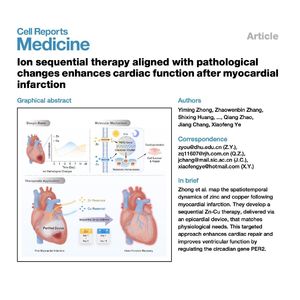
Research into myocardial infarction highlights how trace element imbalances involving zinc and copper worsen heart damage and hinder recovery. Scientists have developed a sequential ion therapy that first supplements zinc to combat early inflammation and then delivers copper to promote later blood vessel growth. This treatment is precisely timed to match the natural pathological shifts occurring in the heart after an injury. Central to this process is the regulation of the circadian gene PER2, which helps restore metabolic balance and protects cardiac cells. To improve delivery, a specialized epicardial device called PerMed was engineered to provide localized, stable ion concentrations directly to the heart. This targeted approach significantly enhances cardiac function and minimizes potential side effects compared to traditional systemic treatments.
References:
Zhong Y, Zhang Z, Huang S. Ion sequential therapy aligned with pathological changes enhances cardiac function after myocardial infarction. Cell Reports Medicine, 2026; 0
