

 1
1 0
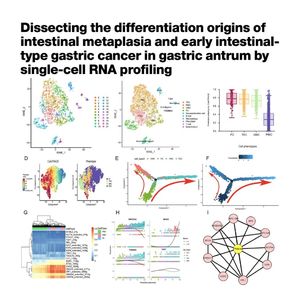
0This study utilizes single-cell RNA profiling and spatial transcriptomics to map how epithelial cells transform during the progression of intestinal-type gastric cancer. By examining stages from chronic inflammation to early malignancy, researchers identified that progenitor cells (PCs) serve as the primary source for various cell lineages in the gastric antrum. During intestinal metaplasia, both PCs and gland mucous cells undergo reprogramming to become intestinal-like stem cells, which then differentiate into mature enterocytes. Furthermore, the analysis highlights KIAA0101+PRAP1+ progenitor cells as the likely cellular origin for early gastric cancer. The research identifies specific transcription factors, such as HNF4A and SIRT6, that regulate these transitions, offering potential targets for early diagnosis and prevention. This comprehensive lineage framework clarifies the molecular dynamics behind the Correa cascade of gastric carcinogenesis.
References:
Yin H, Zhang H, Zheng S, et al. Dissecting the differentiation origins of intestinal metaplasia and early intestinal-type gastric cancer in gastric antrum by single-cell RNA profiling[J]. NPJ Precision Oncology, 2026, 10(1): 167.
