

 0
0 0
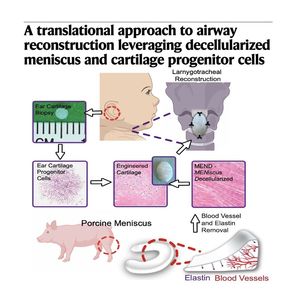
0The paper describes the development of MEND, a novel tissue-engineered scaffold derived from decellularized porcine meniscus for use in pediatric laryngotracheal reconstruction (LTR). Researchers utilized selective enzymatic digestion to create microchannels within the cartilage, allowing for rapid recellularization with ear-derived cartilage progenitor cells (eCPCs). This approach addresses the critical shortage of autologous costal cartilage in infants, which often leads to surgical delays or complications. In a rabbit model, the differentiated eCPCs-MEND grafts demonstrated superior results compared to the current clinical standard, showing significant airway expansion, neocartilage formation, and seamless integration without adverse events. Ultimately, the study presents a clinically viable timeline and a personalized, less invasive surgical alternative for treating severe subglottic stenosis.
References:
Gehret P, Ali Akbari Ghavimi S, Dumas A A, et al. A translational approach to airway reconstruction leveraging decellularized meniscus and cartilage progenitor cells[J]. Nature Communications, 2026, 17(1): 4883.
