

 0
0 0
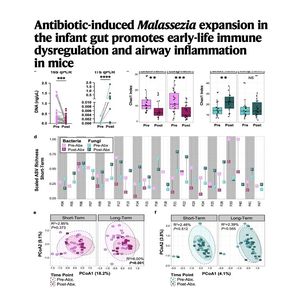
0This research study explores how antibiotic use in infants disrupts the gut microbiome, specifically leading to an expansion of the fungus Malassezia. While the impact of antibiotics on bacteria is well-documented, the authors demonstrate that fungal overgrowth acts as a critical, overlooked factor in immune dysregulation. Using gnotobiotic mouse models, the researchers found that colonization with Malassezia restricta alters the bacterial landscape and triggers heightened airway inflammation in response to allergens and viral infections. These immune shifts are partially driven by eosinophils, which accumulate in the gut and lungs following fungal exposure. Ultimately, the work suggests that managing the infant mycobiome could provide a novel strategy for preventing pediatric asthma and other atopic conditions.
References:
van Tilburg Bernardes E, Glatthardt T, Gutierrez M W, et al. Antibiotic-induced Malassezia expansion in the infant gut promotes early-life immune dysregulation and airway inflammation in mice[J]. Nature Communications, 2026, 17(1): 5499.
