

 0
0 0
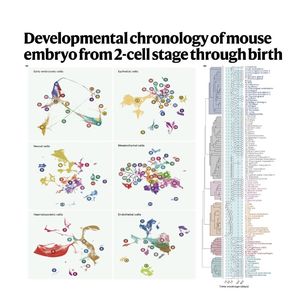
0Researchers have developed the mouse developmental Cell and Lineage Atlas (mdCLA), a massive single-cell transcriptomic resource encompassing 37 time points from the 2-cell stage to birth. This comprehensive dataset covers two million cells and utilizes deep sequencing to identify specific cell types and genetic markers that were previously undetectable. By comparing this atlas to existing studies, the authors demonstrated its superior ability to profile gene expression and lineage relationships across the entire embryonic period. The study specifically identifies a shift in nephron progenitor cells during kidney development and reveals an accelerated differentiation process in epithelial cells after day 14.5. Furthermore, the researchers linked the ablation of the Tub gene in pituitary tissue to postnatal obesity, highlighting the atlas's utility in uncovering functional genetic mechanisms. Ultimately, mdCLA serves as a high-resolution reference for understanding the spatiotemporal dynamics of mammalian development.
References:
Cao S, Lin L, Feng H, et al. Developmental chronology of mouse embryo from 2-cell stage through birth[J]. Nature Cell Biology, 2026: 1-11.
