

 0
0 0
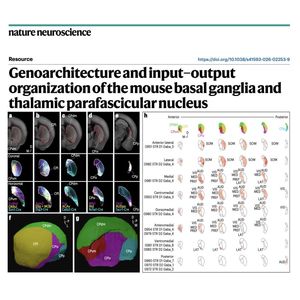
0This research provides a comprehensive three-dimensional map of the mouse basal ganglia and thalamic parafascicular nucleus by integrating genetic data with neural connectivity. By analyzing transcriptomic cell types and viral tracing, the authors delineated specific subdivisions within these brain regions that correlate with organized inputs from the cerebral cortex. The study reveals that these subdivisions serve as structural foundations for parallel processing, where unique modules of the cortex communicate with specific cell types to manage motor control, learning, and emotion. The findings highlight that combinatorial gene expression dictates the global organization of these subnetworks, offering a refined framework for understanding how different brain circuits are partitioned. Ultimately, this genoarchitectural atlas clarifies previous inconsistencies in brain parcellation and identifies how specific neuronal layers contribute to the complex input-output organization of the mouse brain.
References:
Wang Q, Bhandiwad A, Gouwens N W, et al. Genoarchitecture and input–output organization of the mouse basal ganglia and thalamic parafascicular nucleus[J]. Nature Neuroscience, 2026: 1-17.
