

 2
2 0
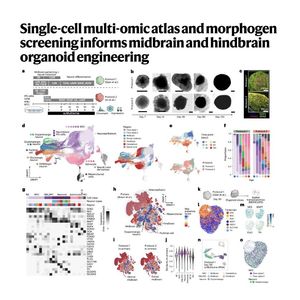
0This scientific study introduces a single-cell multi-omic atlas designed to map the complex regulatory landscape of human midbrain and hindbrain organoids. By analyzing both gene expression and chromatin accessibility, researchers identified the specific genetic programs and transcription factors that drive the development of diverse neuron types, such as dopaminergic and glycinergic neurons. The authors utilized CRISPR-based perturbations to validate how key genes control regional identity and cellular differentiation. Furthermore, a multiplexed morphogen screen of 48 different chemical conditions revealed new ways to generate underrepresented tissues, including the cerebellum and medulla. These findings provide a comprehensive roadmap for engineering high-fidelity brain models to study human development and neurological disorders like Parkinson’s disease. Together, the research establishes a robust framework for improving the reproducibility and diversity of posterior brain organoid technologies.
References:
Azbukina N, He Z, Lin H C, et al. Single-cell multi-omic atlas and morphogen screening informs midbrain and hindbrain organoid engineering[J]. Nature Neuroscience, 2026: 1-11.
