

 1
1 0
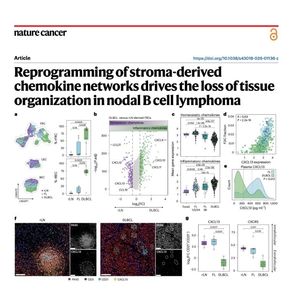
0This paper examine how lymph node architecture is systematically dismantled during the progression of B cell lymphomas. By utilizing single-cell sequencing and spatial mapping, researchers identified that healthy lymph nodes rely on specialized stromal cells to maintain precise cellular zones through homeostatic chemokine gradients. In aggressive malignancies like diffuse large B cell lymphoma (DLBCL), an inflammatory feedback loop triggered by tumor-reactive T cells causes these stromal cells to be reprogrammed. This shift leads to a critical reduction in organization-defining chemokines and an increase in inflammatory signals, resulting in a complete loss of tissue structure. Ultimately, the study reveals that this microenvironmental remodeling and the subsequent loss of architectural integrity are directly linked to poorer patient survival outcomes.
References:
Czernilofsky F, Mathioudaki A, Jopp-Saile L, et al. Reprogramming of stroma-derived chemokine networks drives the loss of tissue organization in nodal B cell lymphoma[J]. Nature Cancer, 2026: 1-15.
