

 0
0 0
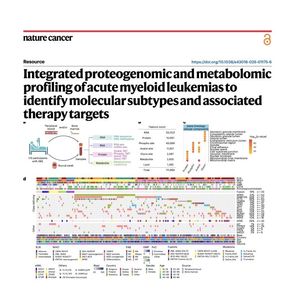
0This comprehensive research presents a multiomic atlas of acute myeloid leukemia (AML), utilizing data from 173 patients to bridge the gap between genetic mutations and clinical outcomes. By integrating thirteen different data modalities, including proteomics, metabolomics, and lipidomics, the study defines eight distinct molecular subtypes that transcend traditional classification systems. The findings highlight a critical metabolic divide where primitive and committed leukemia cells display opposing activities in the MYC and mTOR pathways. Furthermore, the analysis identifies unique biomarkers and transcription factors, such as FOXC1 and HOXB8/9, which characterize specific disease subsets. To aid in personalized medicine, the authors implemented a machine-learning approach to nominate new therapeutic targets and understand drug resistance. Ultimately, this resource provides a unified biological framework for improving patient stratification and treatment development in a notoriously complex blood cancer.
References:
Chu S C A, Hsiao Y, Wang C, et al. Integrated proteogenomic and metabolomic profiling of acute myeloid leukemias to identify molecular subtypes and associated therapy targets[J]. Nature cancer, 2026: 1-23.
