

 0
0 0
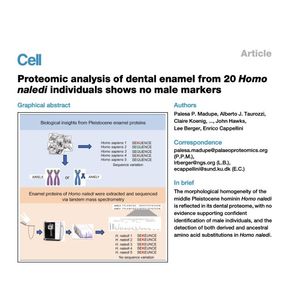
0This research presents a paleoproteomic analysis of dental enamel from 23 specimens of the extinct hominin species Homo naledi, representing at least 20 unique individuals. Using both destructive sampling and minimally invasive acid etching, scientists recovered protein sequences to investigate the biological sex and genetic diversity of the remains found in South Africa's Rising Star cave system. The study found no evidence of male-specific peptides, identifying 19 individuals as female and one as potentially female, which suggests a significant single-sex bias in the fossil record. Furthermore, the protein sequences showed no internal variation, indicating a remarkably homogeneous population that may have experienced prolonged isolation. The data also revealed specific amino acid substitutions, including an ancestral variant shared with Paranthropus robustus, helping clarify the species' evolutionary position. Ultimately, these results demonstrate that acid etching is a sustainable method for sexing rare fossils while raising provocative questions about H. naledi social structures or potential mortuary practices.
References:
Madupe P P, Taurozzi A J, Koenig C, et al. Proteomic analysis of dental enamel from 20 Homo naledi individuals shows no male markers[J]. Cell, 2026.
