

 0
0 0
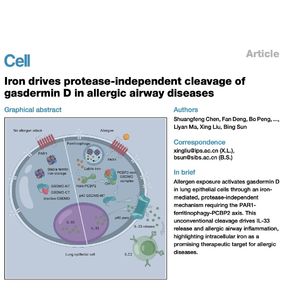
0The research identifies a novel, iron-dependent mechanism for the activation of gasdermin D (GSDMD) in lung epithelial cells during allergic reactions. Environmental allergens trigger the PAR1 receptor, which initiates ferritinophagy to release labile iron within the cell. The iron chaperone PCBP2 then captures this iron and delivers it directly to GSDMD, facilitating a localized Fenton reaction that cleaves the protein without the need for traditional proteases. This protease-independent cleavage produces membrane pores that allow for the secretion of interleukin-33 (IL-33), a key driver of airway inflammation. Experimental results show that iron chelation or genetic disruption of this pathway successfully prevents allergic inflammation and tissue damage in mice. Consequently, targeting intracellular iron or the PCBP2-GSDMD complex represents a promising therapeutic strategy for treating allergic airway diseases.
References:
Chen S, Deng F, Peng B, et al. Iron drives protease-independent cleavage of gasdermin D in allergic airway diseases[J]. Cell, 2026.
