

 0
0 0
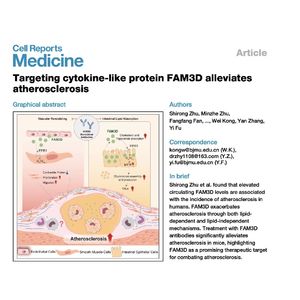
0The research identifies FAM3D as a cytokine-like protein that plays a critical role in the development of atherosclerosis in both humans and mice. Clinical data show that high levels of this protein in the blood serve as a predictor for coronary artery disease and early vascular pathology. The study reveals that FAM3D worsens the condition through two distinct pathways: a lipid-dependent mechanism that increases intestinal cholesterol absorption and a lipid-independent process involving vascular remodeling. Specifically, the protein activates the FPR1 signaling receptor to boost the production of chylomicrons and trigger negative changes in smooth muscle cells. Researchers found that using monoclonal antibodies to target FAM3D effectively reduced plaque formation and lowered blood lipid levels. These findings suggest that inhibiting this protein could be a powerful new strategy to address cardiovascular risks that remain even after traditional cholesterol-lowering treatments.
References:
Zhu S, Zhu M, Fan F, et al. Targeting cytokine-like protein FAM3D alleviates atherosclerosis[J]. Cell Reports Medicine, 2026.
