

 0
0 0
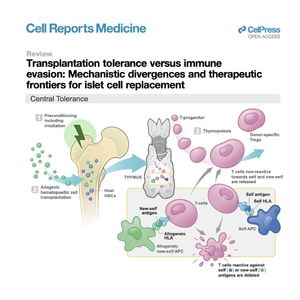
0The paper explores the distinct scientific paradigms of transplantation tolerance and immune evasion as methods to achieve long-term survival of islet cell grafts without lifelong medication. Transplantation tolerance focuses on modifying the recipient’s immune system through central mechanisms, like creating mixed hematopoietic chimerism in the thymus, or peripheral strategies such as using regulatory T cells and costimulatory blockade. In contrast, immune evasion is a product-centric approach where grafts are genetically engineered to remain invisible to the host's immune defenses. The authors highlight that while current pancreatic islet transplants for type 1 diabetes rely on toxic immunosuppressants, these new strategies aim to eliminate such risks. By analyzing various clinical trials and preclinical models, the source underscores the transformative potential of engineering "stealth" grafts to overcome both allorejection and autoimmune recurrence.
References:
Deuse T, Schrepfer S. Transplantation tolerance versus immune evasion: Mechanistic divergences and therapeutic frontiers for islet cell replacement[J]. Cell Reports Medicine, 2026.
