

 0
0 0
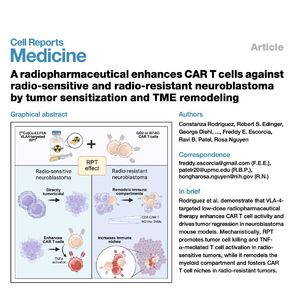
0This research article demonstrates that combining VLA-4-targeted radiopharmaceutical therapy (RPT) with CAR T cell therapy significantly improves treatment outcomes for neuroblastoma, a difficult-to-treat pediatric cancer. The authors found that this dual approach effectively eliminates tumors in both radio-sensitive and radio-resistant mouse models through distinct biological mechanisms. In sensitive tumors, the radiation provides a direct killing effect while triggering a TNF-α inflammatory response that activates nearby T cells. Conversely, in resistant tumors, the therapy remodels the tumor microenvironment by reducing suppressive immune cells and creating niches that support cytotoxic T cell function. The study emphasizes that precise timing and dosing of radiation are essential to enhance immune activity without damaging the therapeutic T cells. Ultimately, these findings suggest that targeted RPT can serve as a powerful tool to prime solid tumors for more successful immunotherapy.
References:
Rodriguez C, Edinger R S, Diehl G, et al. A radiopharmaceutical enhances CAR T cells against radio-sensitive and radio-resistant neuroblastoma by tumor sensitization and TME remodeling[J]. Cell Reports Medicine, 2026.
