

 0
0 0
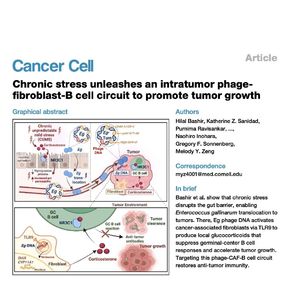
0The research demonstrates how chronic stress accelerates cancer progression by activating a specific biological circuit involving the gut microbiome, fibroblasts, and immune cells. According to the study, persistent stress damages the intestinal barrier, allowing a specific gut bacterium, Enterococcus gallinarum, to escape the digestive tract and infiltrate tumors. Once inside the tumor microenvironment, phage DNA released by these bacteria triggers cancer-associated fibroblasts to produce local glucocorticoids. These steroid hormones directly suppress the activity of germinal center B cells, which are essential for generating effective anti-tumor antibodies. This suppression of the immune response results in significantly faster tumor growth in both mouse models and human clinical samples. Ultimately, the research suggests that blocking this pathway—either by targeting the bacterial DNA sensors or the specific microbes—can restore anti-tumor immunity and hinder cancer advancement.
References:
Bashir H, Sanidad K Z, Ravisankar P, et al. Chronic stress unleashes an intratumor phage-fibroblast-B cell circuit to promote tumor growth[J]. Cancer Cell, 2026.
