

 0
0 0
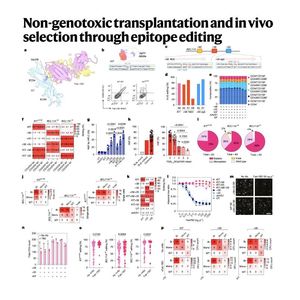
0Researchers have developed a non-genotoxic method for haematopoietic stem cell transplantation that replaces traditional chemotherapy and radiation with targeted immunotherapy. By using adenine base editing, the team introduced specific epitope mutations into the KIT receptor of donor cells, rendering them resistant to monoclonal antibodies while maintaining normal cellular function. This technique allows for the in vivo selection of engineered cells, as clinicians can administer antibodies to deplete diseased host cells without harming the transplanted, edited ones. The study successfully combined this approach with BCL11A enhancer disruption to treat haemoglobinopathies like sickle cell disease by inducing fetal haemoglobin. Results in animal models demonstrated that this strategy achieves high levels of therapeutic chimerism and maintains clonal diversity without the toxic side effects of systemic conditioning. This platform offers a safer, more precise alternative for gene therapies and blood disorder treatments.
References:
Casirati G, Cosentino A, Freschi M, et al. Non-genotoxic transplantation and in vivo selection through epitope editing[J]. Nature, 2026: 1-13.
