

 0
0 0
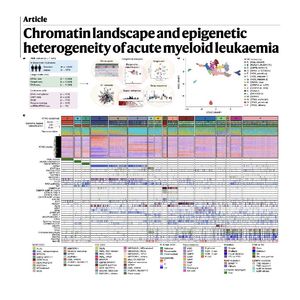
0This study establishes an epigenetic classification system for acute myeloid leukaemia (AML) by analyzing the chromatin accessibility of over 1,500 patients. Using ATAC-seq technology, researchers identified 16 distinct subgroups that reveal critical insights into the disease's pathogenesis beyond traditional genetic mutations. These subgroups are defined by unique super-enhancer profiles and gene-regulatory networks driven by specific transcription factors. The findings demonstrate that this epigenomic framework more accurately reflects the differentiation states and clinical phenotypes of the cancer than previous genomic models. Furthermore, these chromatin-based categories provide independent prognostic value and can predict how patients will respond to specific drug therapies. Ultimately, the research offers a comprehensive multiomics resource for understanding the complex molecular landscape and heterogeneity of AML.
References:
Ochi Y, Liew-Littorin M, Nannya Y, et al. Chromatin landscape and epigenetic heterogeneity of acute myeloid leukaemia[J]. Nature, 2026: 1-11.
